Newsletter
Join the Community
Subscribe to our newsletter for the latest news and updates
We spend a lot of time advising startups. Though one-on-one advice will always be crucial, we thought it might help us scale Y Combinator if we could distill the most generalizable parts of this advice into a sort of playbook we could give YC and YC Fellowship companies. Then we thought we should just give it to everyone. This is meant for people new to the world of startups. Most of this will not be new to people who have read a lot of what YC partners have written—the goal is to get it into one place. There may be a part II on how to scale a startup later—this mostly covers how to start one.
Real startup stories revealing exactly how founders got their first users and customers.

From beach adventures to coffee shop vibes. DatePhotos.AI generates 80-180 dating photos across 40+ carefully curated lifestyle scenes. AI transforms 5-20 selfies into complete dating profile content.
Rick Rubin brings ancient wisdom to the modern age in The Way of Code, a meditation on the art and science of vibe coding. With Claude by Anthropic, the Grammy-award winning producer and author of The Creative Act turns philosophy into practice with artifacts that can be creatively modified with AI.
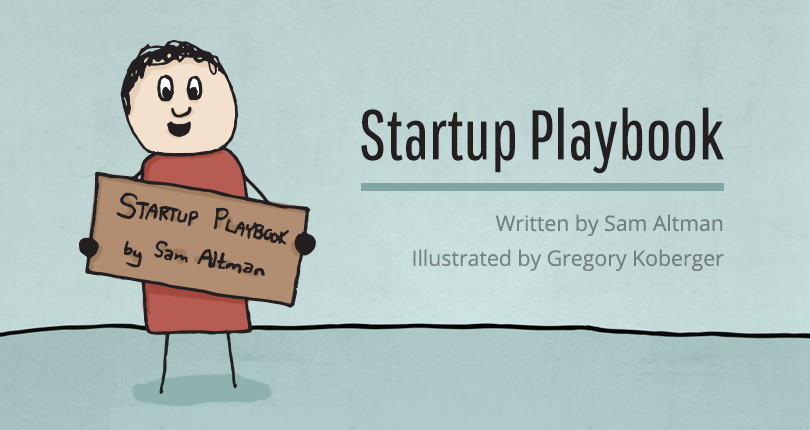
By Sam Altman Illustrated by Gregory Koberger
A guide distilling the most generalizable advice from Y Combinator on how to start a startup. The playbook is divided into four key sections: The Idea, The Team, The Product, and Execution.
A great idea is the foundation, but execution matters more. However, starting with a good idea makes success much more likely.
"It's much better to first make a product a small number of users love than a product that a large number of users like."
Mediocre teams do not build great companies. The most important factor in a startup's success is the strength of the founders.
This is the only thing all great companies have in common: they built a product users love.
Once you have a product, you must turn it into a great company. Execution is the process of creating value over a long period.
Summary generated based on content from playbook.samaltman.com.